Merging Eras in Arlington: A Colonial Reinvented With Color, Pattern and Mid-Century Heirlooms By LL Design House

Mid-century walnut meets a classic scenic mural.
When we first walked through this traditional colonial in Arlington, Virginia, the bones were good but the first floor didn't hang together. The living room, family room and dining room felt choppy and a little unfinished. The furnishings leaned masculine, and nothing tied the rooms into one story.
Our clients, a stylish couple who share the house with two beagles, didn't want a renovation. They wanted their home to finally feel like them. They also had something most designers would love to inherit: a collection of mid-century modern classics, including a Florence Knoll sofa, an Eames lounge chair, and two vintage coffee tables.
The brief was clear. Keep the pieces they love, honor the colonial architecture, and give the whole first floor a serious injection of color and style. The result is a home where two eras sit side by side, and neither one has to whisper.
How Do You Mix Mid-Century Modern Furniture With a Traditional Colonial?
Mid-century furniture and colonial architecture can feel like opposites: clean lines and low profiles next to crown molding, paneled doors and symmetry. The trick is to stop treating them as a problem to hide and start treating them as a conversation.
We gave the clients' heirlooms center stage, and we weren't afraid to reinvent them. Their Florence Knoll sofa got a bold new life in leopard, and it now anchors the living room alongside their vintage coffee table. In the family room, the Eames chair and coffee table glow against warm, saturated walls.
Then we layered in updated classics around them: tailored upholstery, bold pattern and statement lighting. They bridge the decades, so the mid-century pieces read as intentional, not leftover.
The rule we followed: let the architecture stay traditional and let the furniture stay modern, then use color and texture as the common language between them.
How Do You Make a Two-Story Living Room Feel Warm, Not Cavernous?

Statement lighting draws the eye up and makes the most of the two-story height.
Tall rooms are beautiful, but they can feel cold and empty without the right layers. In this two-story living room, we wrapped the walls in Philip Jeffries grasscloth and gave the trim a fresh coat of paint. Grasscloth adds texture and warmth that paint alone can't, so the room feels rich and finished from floor to ceiling.
To make the most of all that vertical space, we added statement lighting that draws the eye up and gives the room a focal point from every angle. Together, the grasscloth and the lighting turned a big, underused room into the most inviting space in the house.
What Is Color Drenching, and Why Does It Work in a Family Room?

The family room, drenched in Faded Terracotta from the Farrow & Ball × Kelly Wearstler California Collection
Color drenching means painting walls, trim and sometimes the ceiling in one color. Instead of white trim outlining every wall, the room wraps around you in a single, enveloping hue.
For the family room, we chose Faded Terracotta from the Farrow & Ball × Kelly Wearstler California Collection, a warm, sun-washed melon that feels both unexpected and timeless. Drenching makes an everyday room feel cozy and complete. It's the perfect place to curl up with two beagles, and the ideal backdrop for the Eames chair's walnut and leather.
3 Wall Treatments That Turned Separate Rooms Into One Story

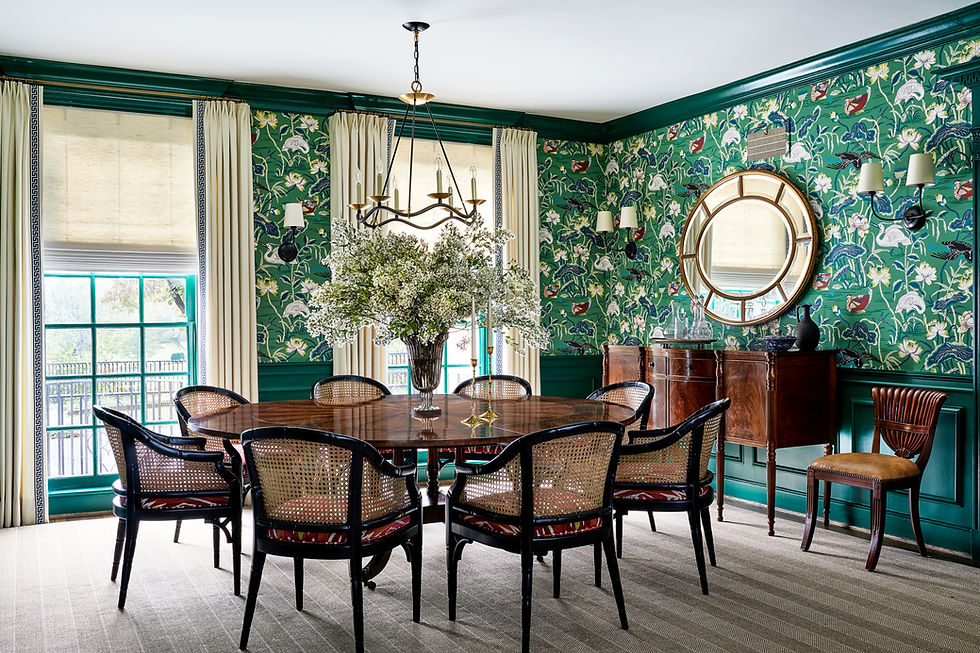
A Schumacher mural gives the dining room its story.
The biggest change wasn't a single room. It was how the rooms now relate to one another. Each space got its own wall treatment, but they share a warm, layered palette, so walking from room to room feels like turning pages in the same book.
1. Philip Jeffries grasscloth in the living room. Textured walls and freshly painted trim give the two-story room depth and warmth.
2. A color drench in the family room. Faded Terracotta wraps the walls in one confident, cozy hue.
3. A Schumacher mural in the dining room. A scenic mural wallpaper turns dinner into an experience and gives the room the storytelling quality it was missing.
Together, the three treatments create the cohesion the first floor lacked, without a single wall coming down.
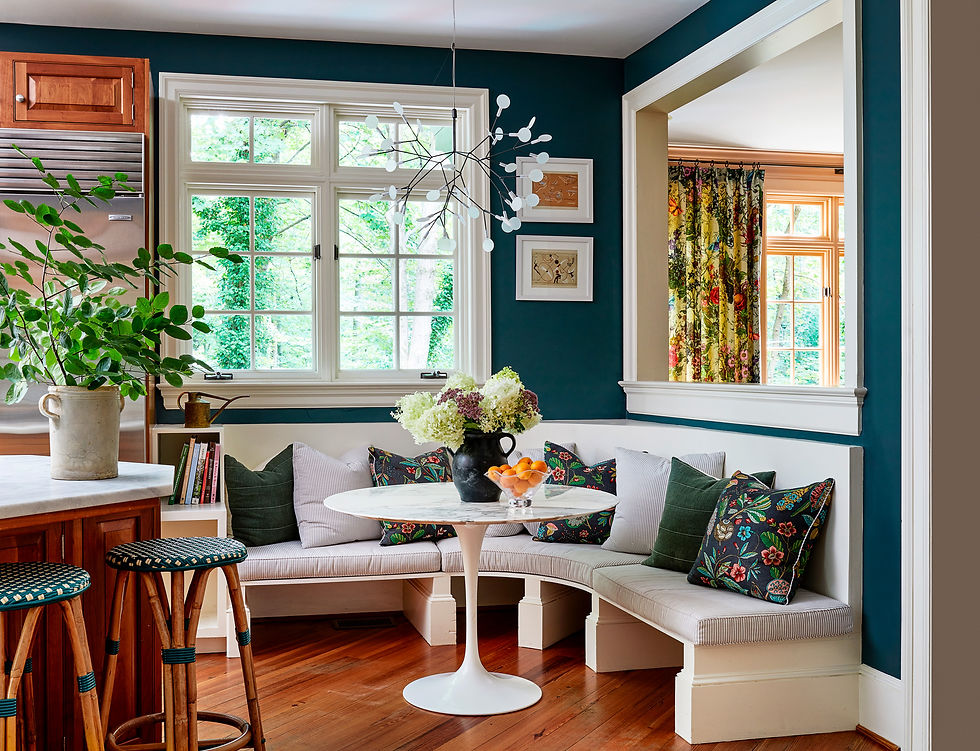
The breakfast nook carries the color story into the kitchen
Can a Stair Runner Really Change the Feel of a Whole House?

Absolutely. Staircases are some of the most-used and least-designed spaces in a home, and this one was simply boring.
We installed an antelope-print runner, and it instantly energized the entry and the path between floors. It's playful and polished at once, and it carries the home's new personality right up the stairs. Our client told us it's one of her favorite things in the whole house.
We think that's what good design should do: make the everyday moments feel special.
The Design Risks That Paid Off
Every project has a moment where the client has to trust us. Here, it was two.
The first was the melon color drench. On a paint chip, a warm terracotta-melon can feel like a leap. On the walls of the family room, it's pure warmth.
The second was recovering a Florence Knoll sofa in leopard. Animal print on a mid-century icon, in a colonial? Yes, and it's become one of the most talked-about pieces in the house.
When the project was finished, our clients couldn't believe how we had reinvented their old pieces and their dated first floor. The words they used were upscale, stylish, completely reinvented. That's the power of combining what you already own with a few brave choices.
About the Merging Eras in Arlington Project
Location: Arlington, Virginia
Home: Traditional colonial
Scope: Signature full-service interior design, first floor (living room, family room and dining room)
Designer: LL Design House
Style: Classic colonial meets mid-century modern, with bold color and pattern
Key design elements: Philip Jeffries grasscloth, Farrow & Ball × Kelly Wearstler color drench in Faded Terracotta, Schumacher mural wallpaper, antelope stair runner, statement lighting, and the clients' own Florence Knoll sofa (reupholstered in leopard) and Eames pieces
Photography: Stacy Zarin Goldberg

Frequently Asked Questions
Can mid-century modern furniture work in a traditional home?
Yes. Let the architecture stay classic, and the furniture stay modern, then connect them with a shared color palette and texture. Iconic pieces like Florence Knoll and Eames often look even better against traditional backdrops.
Can you reupholster a designer sofa like a Florence Knoll?
Yes. Reupholstering a well-made classic in a bold fabric, like leopard, keeps the piece you love and gives it a fresh personality that fits your updated home.
What is color drenching?
Color drenching is painting walls, trim and sometimes the ceiling in a single color. It creates a seamless, enveloping look that makes a room feel cozy and complete.
How do you make a choppy first floor feel connected without renovating?
Give each room its own wall treatment, such as grasscloth, paint or wallpaper, but tie them together with a shared palette. Repeating colors and materials from room to room creates flow without moving walls.
Ready to Reinvent What You Already Own?
You don't have to start over to love your home again. If you have pieces you treasure and rooms that need a story, we'd love to help. Schedule a discovery call to start your own transformation.

Comments