Inside a Fresh Take on Country Living: A Colonial Retreat in Warrenton, VA
Updated: Sep 25
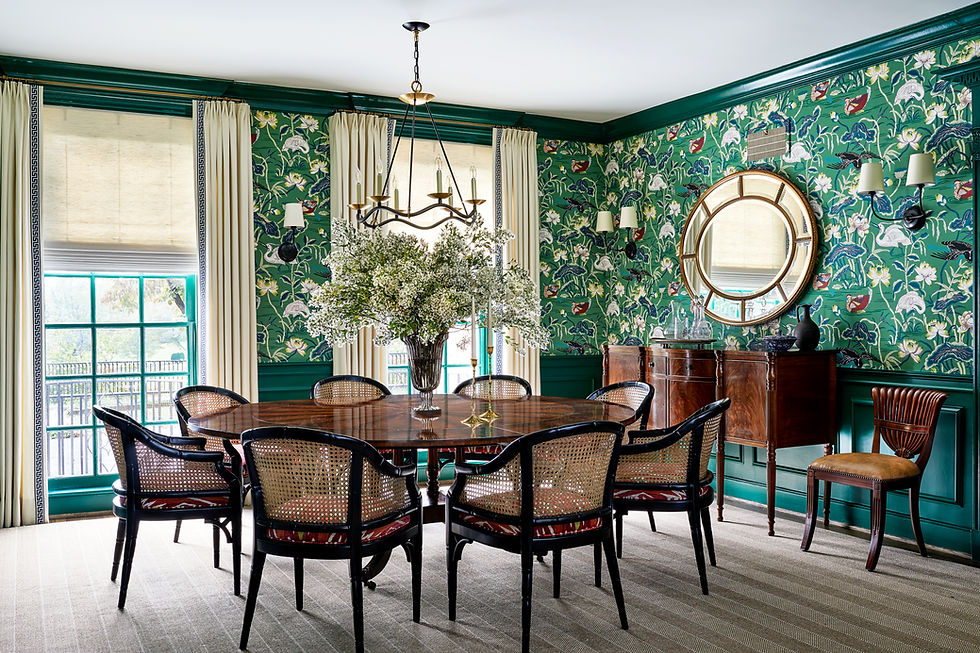
LL Design House completed a full decorating project on a 120-acre colonial estate in Warrenton, Virginia, a second home for a Washington, D.C. family, using paint, wallpaper, lighting, drapery, furniture, and rugs to update the historic property without a structural renovation.
Now for the fun part: meet the newest addition to the family of projects (not puppies, though there's one of those too), and proof that you don't need a single permit to make a house feel brand new.
This DC family found us through a referral, we love those almost as much as we love a good wallpaper moment, came with a clear ask: keep the historic bones, lose the beige, and make it feel like somewhere their kids and their new puppy could actually live.
No walls came down. No contractors were harmed in the making of this project. Just paint, wallpaper, lighting, drapery, furniture, and rugs, and a whole lot of confidence. Here's how a "decorating only" project ended up looking like a full renovation.
Can Wallpaper Really Replace a Renovation?
Yes, and this house is the proof. Wallpaper was the single biggest transformation tool on this project, used floor to ceiling (and in two rooms, onto the ceiling itself) to change the feel of a room without touching a single wall.
If you take one thing from this house, let it be this: wallpaper is a renovation in disguise. The child's bedroom got a soft pink floral print that climbs right up onto the ceiling. The home office is wrapped floor to ceiling in a moody botanical bird print that makes a small desk nook feel like a room worth writing home about. The dining room went bold emerald green, birds and all, turning a stiff historic dining room into the best seat in the house.
Different pattern, different mood, same idea: commit to the wallpaper, and let it do the work walls alone never could.
How Do You Modernize Dated Wood Trim Without Replacing It?

High-gloss paint. Dated wood trim is the great equalizer of old houses, it doesn't care how good your furniture is, it will still make a room feel stuck in the past, and a confident, glossy paint color over that trim can update it just as dramatically as ripping it out would.
That's exactly the approach we took here. In the den, deep cobalt blue walls and trim turned dated wood paneling into a moody, glamorous library nobody wants to leave. In the home office, the window trim went a soft, confident blue against that bird-print wallpaper. In the dining room, the wainscoting got the same green as the walls, so the whole room reads as one lush, layered moment instead of a room fighting itself.
No sledgehammers required. Just the right sheen and the nerve to commit to color.
How Do You Mix Antique Furniture With Modern Design?
Pair it with one piece that doesn't match. This family had history in their furniture, and we weren't about to ask them to give it up, so inherited pieces, antique desks, and a wonderfully creaky vintage oak swivel chair all stayed exactly where they belonged. Marrying those antiques with modern shapes, rather than surrounding them with more traditional pieces, is what kept every room from feeling like a period reproduction.
What changed was what we put them next to. A blue and white patterned chair, right up against a mahogany antique sideboard. A black iron four-poster canopy bed in a room dressed in green grasscloth and floral drapery. A striped chaise lounge tucked next to a graphic black-and-white art piece that has nothing to do with "traditional" and everything to do with making the room feel current.
Old pieces don't need to be surrounded by more old pieces. They need one modern shape to lean against, and suddenly the whole room feels like it was collected on purpose.
How Do You Make a Formal Home Family-Friendly?

Durable materials and a floor plan that doesn't flinch from real life. A 120-acre retreat sounds formal, but this one isn't, not really, because a formal house doesn't survive a family with kids, fields to run in, and a brand-new puppy who has opinions about furniture.
That meant durable, family-friendly carpet in the spaces that see the most life. It meant a child's room dressed up in pink florals from ceiling to curtains, playful enough for tea parties, polished enough that nobody has to apologize for it. It meant keeping the formality of the architecture while making sure every room could survive an actual Tuesday.
Historic doesn't have to mean precious. It just has to mean intentional.
The Takeaway
You don't need a construction crew to make an old house feel new. You need wallpaper that commits, paint that does the heavy lifting, antiques that get a modern neighbor, and a design plan that accounts for the puppy.
This house proves it, room by room.
About A Colonial Retreat in Warrenton, VA project
Location: Warrenton, VA
Project Type: Full-home decorating
Interior Designer: LL Design House
Design Style: Traditional, Transitional, Eclectic ("historic goes younger")
Key Design Elements: Wallpaper layering (including ceiling wallpaper), high-gloss painted trim, antiques paired with modern shapes, family-friendly durable materials
Frequently Asked Questions About Mixing Patterns in Interior Design
Can you decorate a historic home without renovating it?
Yes. This entire project used only paint, wallpaper, lighting, drapery, furniture, and rugs, no walls were removed or structurally altered, and the home still reads as fully transformed.
What kind of wallpaper works well in a colonial-style home?
Traditional motifs in bold, updated colorways tend to work best, think botanical, bird or floral prints in saturated tones rather than muted, historic palettes. It keeps the pattern in step with the architecture while still feeling current.
Is it okay to use bold color in a traditional or colonial house?
Yes, and it's often what keeps a historic home from feeling like a museum. Confident color on trim, wainscoting, and walls works with traditional architectural details rather than against them.
How do you make a home feel livable for a family with kids and pets?
Durable, family-friendly materials in high-traffic spaces ( like stain resistant carpet) let you keep the formality of the architecture intact without babying every room.
Ready for Your Own Fresh Take?
If you’ve got a historic home that needs an update, minus the renovation timeline, we'd love to help you.
Explore our Design Concierge services for a full-scale projects like this one, or see the Family Living on Loughboro project for another take on bold pattern and color in a Washington, D.C. home.

Comments